Every brand competing in search wants more visibility. Rich snippets and featured snippets both deliver it, and both show up on the same results page. What separates them is everything underneath: how Google decides to show them, what type of content qualifies, and what a content team actually has to do to earn each one. Getting clear on those differences turns two vague optimization goals into two precise, executable strategies through technical SEO a part.
Two Formats, Two Completely Different Pathways
Rich Snippets: Upgrading the Listing That Already Ranks
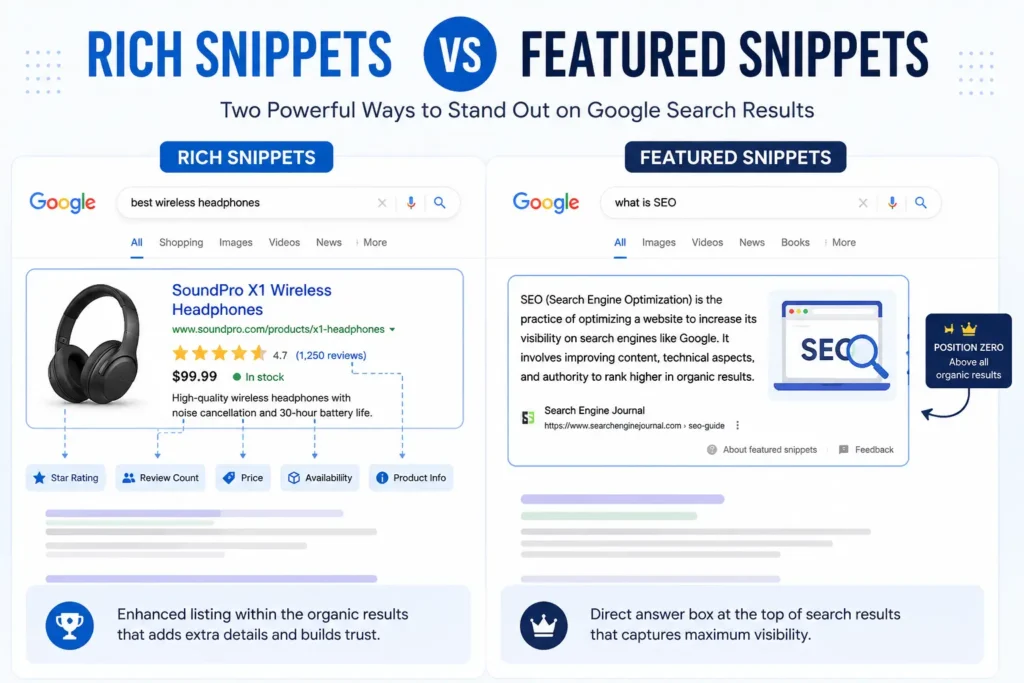
A rich snippet begins as a standard organic listing and becomes something more through structured data. The title, URL, and description stay in place. What Google adds around them is a layer of enriched information sourced directly from schema markup on the page: star ratings and review counts for products and services, calorie counts and prep times for recipes, event dates and venue names for listings, pricing and availability for e-commerce pages, and author credentials for editorial content.
Indexed pages and the quality of their crawlability sit at the foundation of rich snippet eligibility. Google can only enhance results from pages it has successfully indexed and evaluated. Schema.org vocabulary, implemented through JSON-LD placed in the page head, is the technical language that tells Google’s crawlers what each data field means and whether it qualifies for enhanced display. Google’s Rich Results Test validates that the markup is correctly formatted before any enhanced appearance becomes possible.
The specificity of this implementation is what separates eligible pages from ineligible ones. A product page with aggregate rating schema referencing a verified review count earns a star rating display. The same page with incomplete field references receives a standard result. Schema precision is a technical craft that rewards careful execution.
Featured Snippets: Claiming the Space Before the Organic List Begins
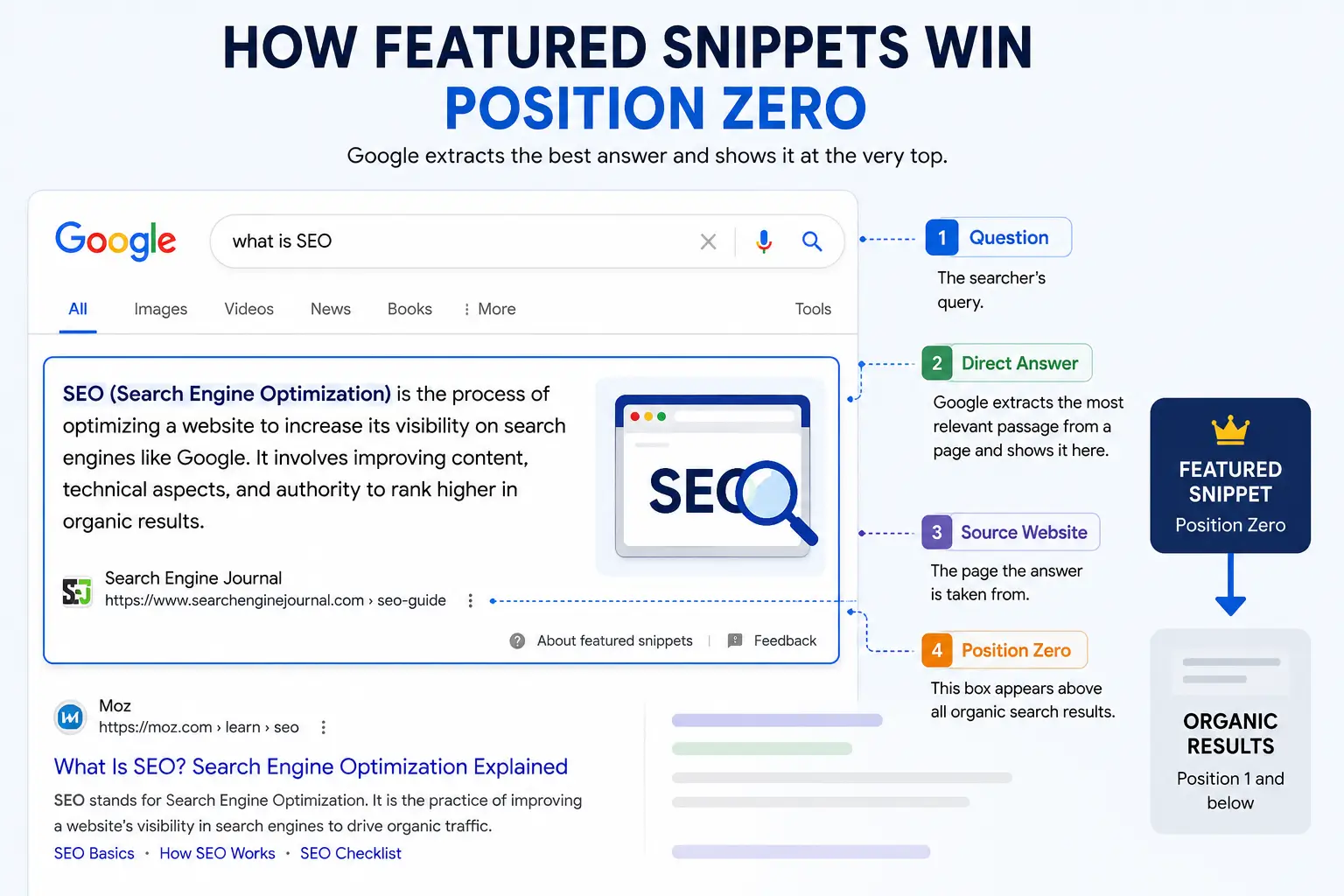
A featured snippet is a fundamentally different kind of placement. It occupies a dedicated box at the very top of search results, above all organic listings, in a position Google calls Position Zero. Google selects a specific passage from an indexed page and surfaces it as the direct answer to a query. The selection is entirely algorithmic, based on how clearly and completely a passage answers the question of how the surrounding page is structured and how much authority the page carries for the topic.
How Google selects content for answer-based results follows a consistent set of structural signals. Pages that open each answer section with the core response in the first sentence, use headings framed around specific questions, and keep answer paragraphs in the 40 to 60 word range consistently appear in Google’s selection pool. The format Google selects, whether a paragraph, a numbered list, a bulleted breakdown, or a comparison table, always reflects the intent of the query.
The most important distinction here is that writing quality, structural clarity, and content authority are the primary drivers of featured snippet selection. Answer-first content architecture is what earns Position Zero, with schema supporting overall page authority in the background.
The Clearest Way to See the Difference
| Dimension | Rich Snippets | Featured Snippets |
| Page Position | Within organic stack | Above all organic listings |
| Selection Trigger | Schema.org structured data | Content structure and query alignment |
| Information Shown | Supplementary data fields | Extracted content passage |
| Format Options | Reviews, ratings, events, recipes, products | Paragraph, list, table |
| Technical Input | JSON-LD schema markup | Heading and paragraph architecture |
| Who Controls Selection | The site signals eligibility through markup | Google selects based on content quality |
| Primary CTR Benefit | Visual differentiation in the stack | Dominant placement before all other results |
How Rich Snippets and Featured Snippets Drive Different Traffic Benefits
The Click Advantage Rich Snippets Create
Rich snippet performance comes from the visual contrast they create on a results page. A listing displaying star ratings, pricing, and review counts sits in a noticeably different visual category from the plain text listings around it. Searchers evaluate results in fractions of a second, and a result that communicates trust signals before a user reads a single word of the description captures attention and earns clicks at a measurably higher rate.
Backlinko research indicates that rich snippet-enhanced results generate click-through rate improvements between 30% and 50% compared to standard results occupying similar positions. Product categories show the strongest lifts because review stars and pricing answer the questions most immediately relevant to a purchase decision. Recipe content shows strong engagement because preparation details and ratings answer practical questions before the user commits to clicking.
The Visibility Advantage Featured Snippets Create
Featured snippets operate in a completely separate competitive arena. First Page Sage data shows that position zero placements generate click-through rates that outperform standard position one results for most informational query types. The placement is dominant, sitting at the top of the page with visual weight that every other result beneath it competes against.
For brands building authority in a specific topic area, earning featured snippet placements across a cluster of related queries compounds recognition in a way that climbing standard organic positions achieves more gradually. Each snippet win reinforces Google’s view of the site as a trusted source for that topic, which strengthens eligibility for adjacent queries and expands the total surface area of the brand’s search presence.
How to Prepare Content and Schema for Both Snippet Types
Schema Markup: Precision Is What Makes It Work
Schema.org provides the standardized vocabulary that bridges content and machine understanding. The schema types most commonly associated with rich snippet appearances include product schema for e-commerce and aggregate rating and review schema for businesses and services, a recipe schema for food content, an event schema for dated listings, an article schema for editorial pages, and an FAQ schema for question-and-answer sections.
JSON-LD is Google’s preferred implementation method because it lives in the page head as a clean script block rather than embedded in the HTML body. This separation makes it straightforward to maintain and update as schema guidelines evolve. Regular validation through Google’s Rich Results Test confirms that markup is correctly structured and eligible for enhanced display, keeping the technical layer accurate as the site grows.
Content Structure: The Writing Decisions That Earn Position Zero
Featured snippet eligibility is a writing and structural discipline practiced at the content creation stage. Google evaluates pages based on how directly they answer the queries that trigger them, which means the structure of each page section carries as much weight as the quality of the information it contains.
The answer-first structure delivers the core response in the opening sentence of each answer section. Google extracts from the beginning of sections, so content that leads with the answer gives Google a clean, immediately useful passage to evaluate. Headings framed as specific questions create a structured map of answerable queries across the page, giving Google multiple candidate passages to consider for multiple related searches. Answer paragraph length calibrated to the 40 to 60 word range matches the extraction pattern. Google is used most consistently for paragraph snippet selection.
The way AI-powered search processes and prioritizes content (How AI-Powered Search Changes Your Content Optimization) follows many of the same structural signals that earn featured snippet selection. Well-organized, answer-forward content that demonstrates clear topical authority earns recognition across featured snippets, People Also Ask placements, and AI Overview citations simultaneously, making structural discipline a high-return investment across the full range of enhanced results Google surfaces today.
How to Optimize for Rich Snippets and Featured Snippets Together
Aligning Content Type With the Right Format
Rich snippets deliver the greatest returns for content categories where supplementary data fields inform purchasing and decision-making behavior. E-commerce pages, local service businesses, recipe and food content, and event listings all carry data fields that add meaningful value to the search listing when displayed through schema. For these content types, schema implementation is a foundational priority.
Featured snippets deliver the greatest returns for informational content addressing question-based queries. How-to guides, explanatory articles, comparison content, and definition-style pages all generate the query types where Google actively seeks a featured snippet answer. For these content types, writing structure and heading architecture are the primary optimization levers.
Tracking What Is Actually Working
Google Search Console surfaces rich result performance through its Rich Results report, which shows which pages are actively earning enhanced appearances. Comparing click-through rates for pages with active schema display against their pre-implementation baselines establishes the direct lift attributable to structured data.
Featured snippet performance appears in Search Console as Position One designation with snippet classifications attached. Ranking content for question-based results across a topic cluster becomes measurable through impression-to-click ratios and position tracking filtered by question-intent queries. Semrush and Ahrefs extend this visibility by showing which queries trigger snippets, which pages currently hold them, and where competitive opportunities exist for well-structured content to earn selection.
What Works Better—Rich Snippets or Featured Snippets
Rich snippets and featured snippets are both powerful, and the one that works best for any given page is determined by what that page is designed to do. A product page with strong schema earns visual differentiation in the organic stack. An informational guide with clear answer architecture earns the top position on the page before the organic stack even begins. The brands that understand this distinction build toward both formats in parallel, applying schema precision to their transactional and structured content while applying answer-first writing discipline to their informational content.
Both capabilities together create a search presence that performs across the widest possible range of query types, earning enhanced visibility at every stage of the searcher’s journey from awareness to decision.