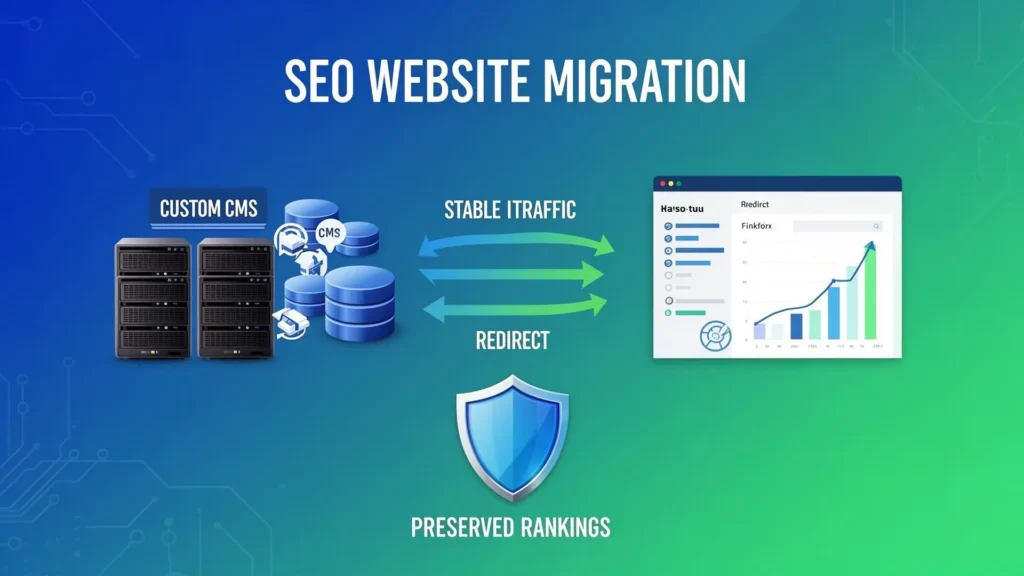
A web migration opens the door to a stronger, faster, and better-optimized website. At the same time, search engines gain a clear signal to understand what changed, where content moved, and how to reassign the authority your old URLs spent years building. When that signal is strong and clear, recovery moves quickly and successfully. The good news is that every step involved in recovering and enhancing visibility after a migration is learnable, repeatable, and within reach for any team that commits to a structured approach.
Why Traffic Dips Happen After a Migration
Search engine indexing works on a crawl-and-cache model in technical SEO. When a URL changes, Google treats the destination as a fresh page ready to be re-crawled, re-evaluated, and reindexed so that historical ranking value can transfer smoothly. This natural process creates an exciting window of opportunity for optimization while search engines update their understanding.
Well-managed migrations preserve and even amplify visibility by addressing common transition points such as redirect configurations, internal links, metadata alignment, crawl efficiency, and structured data continuity. Platforms like WordPress and Joomla manage metadata differently, so moving between content management systems with a thorough content audit allows title tags, meta descriptions, and canonical tags to transfer beautifully and support strong performance. Understanding these elements makes the recovery path clear, positive, and full of potential.
“A site migration should be an engine for growth, not a disruption. With the right technical foundation and monitoring rhythm, sites frequently exceed their pre-migration rankings within two months.”
Step 1: Validate Your Redirect Map Before Anything Else
The redirect map forms the strong backbone of any successful traffic recovery plan. Every URL that existed on the old site, including category pages, product detail pages, blog posts, and image paths, receives a corresponding 301 redirect pointing to its closest, most relevant equivalent on the new site. A 301 redirect preserves accumulated link equity and clearly tells search engines that the move is permanent, allowing ranking signals to transfer efficiently and effectively.
Common Redirect Opportunities To Optimize Immediately
- Streamlined redirect paths that preserve authority fully
- Targeted redirects that guide each page to its best new home
- Complete coverage for filtered product pages, pagination URLs, and subfolder structures
- Clean redirect flows that support smooth crawling and accessibility
Tools like Screaming Frog, Ahrefs, or Google Search Console make it straightforward to audit the full redirect setup and identify every opportunity for improvement. Crawling the live site and comparing results against your pre-migration URL inventory provides a clear, actionable picture of which paths will benefit from attention. Prioritizing the highest-traffic pages first maximizes positive impact and keeps the recovery timeline efficient.
Quick Insight
When internal links point directly to the new URL structure, crawl budget is used efficiently and web crawlers reach content in a single, smooth step. This optimization enhances overall site performance and supports faster indexing.
Step 2: Restore On-Page Elements and Structured Data
During a migration, on-page elements present a wonderful opportunity to refresh and strengthen SEO foundations. Title tags optimized over months, meta descriptions crafted to increase click-through rates, H1 tags aligned with primary keyword targets, and schema markup that powers rich results can all be carried forward and enhanced in the new environment. Ensuring pages are fully prepared for featured placements starts here, as structured data helps search engines deliver rich snippets and expanded visibility.
A side-by-side comparison of old and new pages using a crawl tool confirms that every page carries its canonical tag pointing to the correct URL, that pages intended for indexing are fully ready, and that Open Graph and Twitter card tags support the core HTML elements. For e-commerce sites on platforms like Shopify, product schema, review markup, and breadcrumb-structured data receive careful verification so templates showcase content beautifully.
What To Audit In Each Page Template
- Title tag length, primary keyword placement, and brand consistency
- Meta description relevance and engaging call-to-action strength
- H1 uniqueness and alignment with the page’s primary search intent
- Schema type accuracy: Article, Product, LocalBusiness, FAQ, or BreadcrumbList
- Canonical tags pointing to the live, indexable version of each URL
Step 3: Recover Backlink Authority Through Outreach
Backlinks pointing to old URLs represent valuable existing authority ready to be activated. While 301 redirects pass equity effectively, a direct link to the new URL delivers the full signal cleanly. Running a backlink audit through Ahrefs or SEMrush after launch quickly identifies high-authority referring domains and creates opportunities to request link updates.
For pages where content was consolidated or restructured, developing enhanced replacement resources that serve the same search intent provides both users and referring sites with even stronger value. This approach turns the transition into a fresh content opportunity that supports the overall digital marketing strategy. Understanding how content formats drive significantly more organic clicks through structured, crawlable pages guides smart investment in high-value resources.
“Backlink reclamation after a migration is not just about preserving existing authority. It opens a conversation with site owners who already value your content, making them ideal targets for future link-building relationships.”
Step 4: Submit Your XML Sitemap and Use Search Console Actively
An updated XML sitemap clearly tells search engines which pages are canonical, indexable, and ready for crawling. After a migration, the sitemap reflects the new URL structure, highlighting fresh paths and optimized content. Submitting this sitemap through Google Search Console and Bing Webmaster Tools accelerates re-indexing by providing crawlers with a prioritized, efficient list of valuable pages.
Google Search Console serves as a highly valuable monitoring environment in the weeks following launch. The coverage report reveals which URLs are successfully indexed, the performance report highlights keyword positions ready for growth, and the Core Web Vitals report identifies opportunities to enhance loading and interactivity. For domain changes, the Change of Address tool formally notifies Google of the positive transition, speeding up the smooth transfer of signals between old and new domains.
Monitoring Benchmark
Weekly tracking of organic traffic, keyword rankings, crawl health, and page speed against your pre-migration baseline for the first 60 days provides clear visibility into progress and emerging opportunities across page segments.
Step 5: Strengthen Internal Linking and Content Quality
Internal links distribute ranking strength effectively across a site and guide web crawlers through a rich content architecture. After a migration, updating internal links to reference the new URLs directly, refining anchor text to match current page topics naturally, and building strong topic cluster structures around high-value content all contribute to faster authority consolidation and enhanced performance on the new domain.
Content quality directly supports accelerated recovery. Pages that deliver thorough, well-structured information on clearly defined topics re-earn and often surpass their rankings by offering exceptional value. Revisiting key pages with updated information, clearer headings, improved internal linking, and richer supporting detail gives search engines strong reasons to elevate their positions. This phase also opens the door to adding new search-intent-aligned content that strengthens previously underserved areas of the site.
Content Actions That Support Ranking Recovery
- Update statistics and references on existing posts to signal freshness to crawlers
- Add FAQ sections where users benefit from quick, direct answers
- Strengthen topic cluster structures so related pages link meaningfully
Improve page load performance through image compression, caching, and clean HTML structure
What a Realistic Recovery Timeline Looks Like
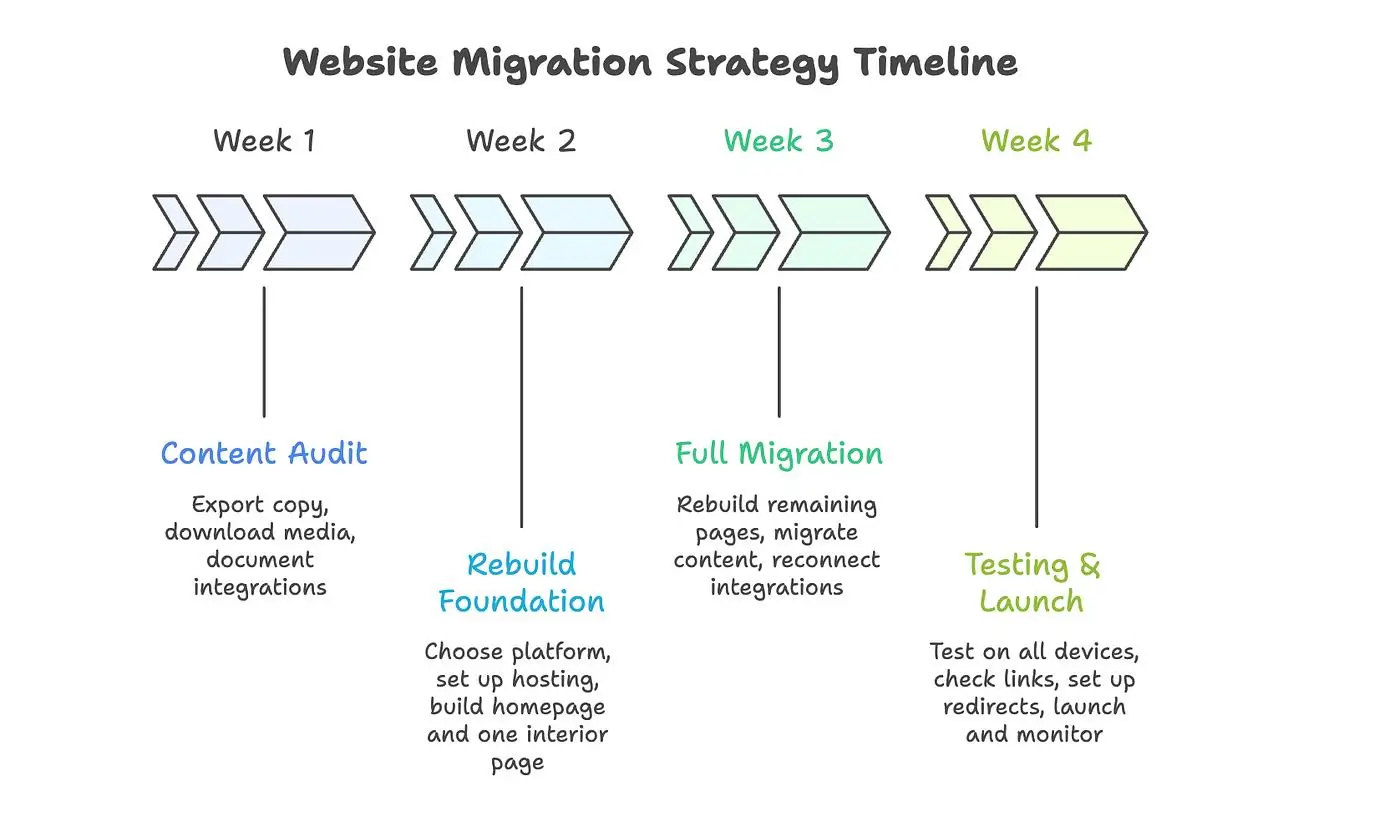
Smaller migrations involving a focused number of URL changes typically stabilize positively within four to eight weeks. Larger migrations, including full domain changes or platform shifts to modern architectures, often reach baseline traffic levels within four to twelve months before surpassing previous benchmarks. The Wise case study demonstrates that a well-executed domain migration achieved full recovery in approximately eight months and then exceeded prior traffic levels, a common and inspiring pattern for thoughtfully managed migrations.
Continuous post-migration monitoring through Google Analytics and Search Console brings clarity and confidence to the process. Tracking organic traffic weekly against the pre-migration baseline allows early celebration of gains and identification of areas ready for further optimization. As rankings stabilize and crawl efficiency improves, the data confirms that recovery is complete and the site stands ready to grow from its enhanced foundation.
“The businesses that recover fastest from a web migration are the ones that treat the post-launch phase with the same rigor as the pre-launch plan. Monitoring, fixing, and iterating is where traffic comes back.”
Building Forward After Recovery
Once organic traffic returns to and exceeds pre-migration levels, the site enjoys a stronger technical position than ever before. Clean URL structures, verified structured data, streamlined redirect paths, and an up-to-date XML sitemap create a healthy, high-performing foundation for ongoing search engine optimization success. New content added from this point forward benefits from the improved architecture, and backlinks built post-migration point directly to permanent, well-optimized URLs.
Web migration recovery is an active, rewarding phase of technical refinement, outreach, content enhancement, and performance monitoring. When executed consistently, it transforms the transition into a long-term visibility gain. Every improvement compounds beautifully: stronger redirects enhance authority transfer, richer content drives higher engagement, and optimized internal linking helps more pages earn their share of organic search traffic across the entire site.