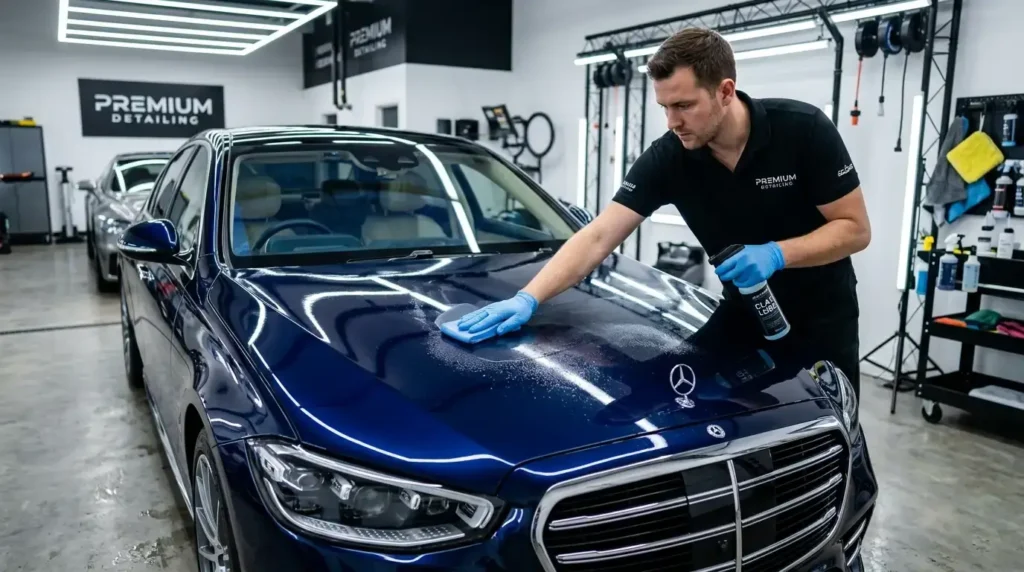
Leather seats do something to a car’s interior that nothing else quite replicates. The texture under your hands, the way the cabin smells, the overall sense that you are sitting in something well-made and worth caring for. Drivers who have leather interiors tend to feel that connection with their vehicle in a way that cloth or vinyl simply does not create.
That connection is also what makes professional leather seat detailing such a worthwhile experience. It is not just about keeping things clean. It is about understanding what leather actually needs, giving it the right care at the right time, and protecting the comfort and quality that made it worth having in the first place. This guide walks through all of that in plain terms, covering leather types, the professional detailing process, conditioning, protection options, and how to find a provider who genuinely knows what they are doing.
What Sets Professional Leather Detailing Apart
Most car owners have tried wiping down their leather seats at some point. A damp cloth, maybe a spray from the auto aisle, a quick pass, and done. The seats look a little better for a day or two, and then they are right back where they started.
Professional leather seat detailing works differently, and the gap in results is significant. A trained detailer comes in with purpose-built tools, professional-grade leather-specific products, and the kind of hands-on knowledge that only comes from working on dozens of different interior materials across hundreds of vehicles. They know how coated leather responds differently than semi-aniline. They know where body oils accumulate along seat bolsters. They know that conditioning without cleaning first just seals in whatever is already sitting on the surface.
The outcome of that expertise is a leather interior that feels genuinely restored rather than just wiped over. Seats come out softer, cleaner through the seams and perforations, and protected in a way that holds up through weeks of regular use. Regular professional attention also keeps leather performing well over the long haul, preserving that supple feel and rich appearance that makes leather interiors so appealing in the first place.
Knowing Your Leather Makes All the Difference
Not all automotive leather is the same material, and treating it all identically is one of the most common mistakes in leather care. The three main types of leather found in car interiors are vinyl, coated, and aniline, and identifying which type is present before any cleaning begins is essential, because using an incompatible cleaner on the wrong leather type can cause lasting surface damage.
- Coated or Pigmented Leather covers the majority of vehicles on the road today. This is genuine leather that has been finished with a synthetic pigment coating designed to resist staining, and it is the preferred choice across most luxury vehicle seat applications for the way it combines a soft, natural feel with meaningful surface durability. It responds well to professional care and holds up reliably with consistent maintenance.
- Semi-Aniline Leather steps up in quality and is found in premium vehicles. It offers a balance of cleanability and genuine luxury, with a thin protective layer that provides resistance to daily wear while preserving the natural warmth and tactile richness that real leather lovers appreciate.
- Full Aniline Leather sits at the top of the tier and is reserved for truly exclusive vehicles. This leather type involves minimal processing and lets the hide’s natural grain and character show through fully, which means it rewards consistent conditioning and careful handling to keep it at its best.
- Vinyl and Synthetic Leather appear across a wide range of everyday vehicles and share many care principles with genuine leather, though the products that work best for each material differ enough that a professional identification step always makes sense before any cleaning begins.
A professional detailer reads the material correctly from the start and builds their entire approach around what that specific leather type needs.
How a Professional Leather Detail Actually Flows
Walking through the professional process helps explain why the results are so noticeably better than anything a quick home effort can produce.
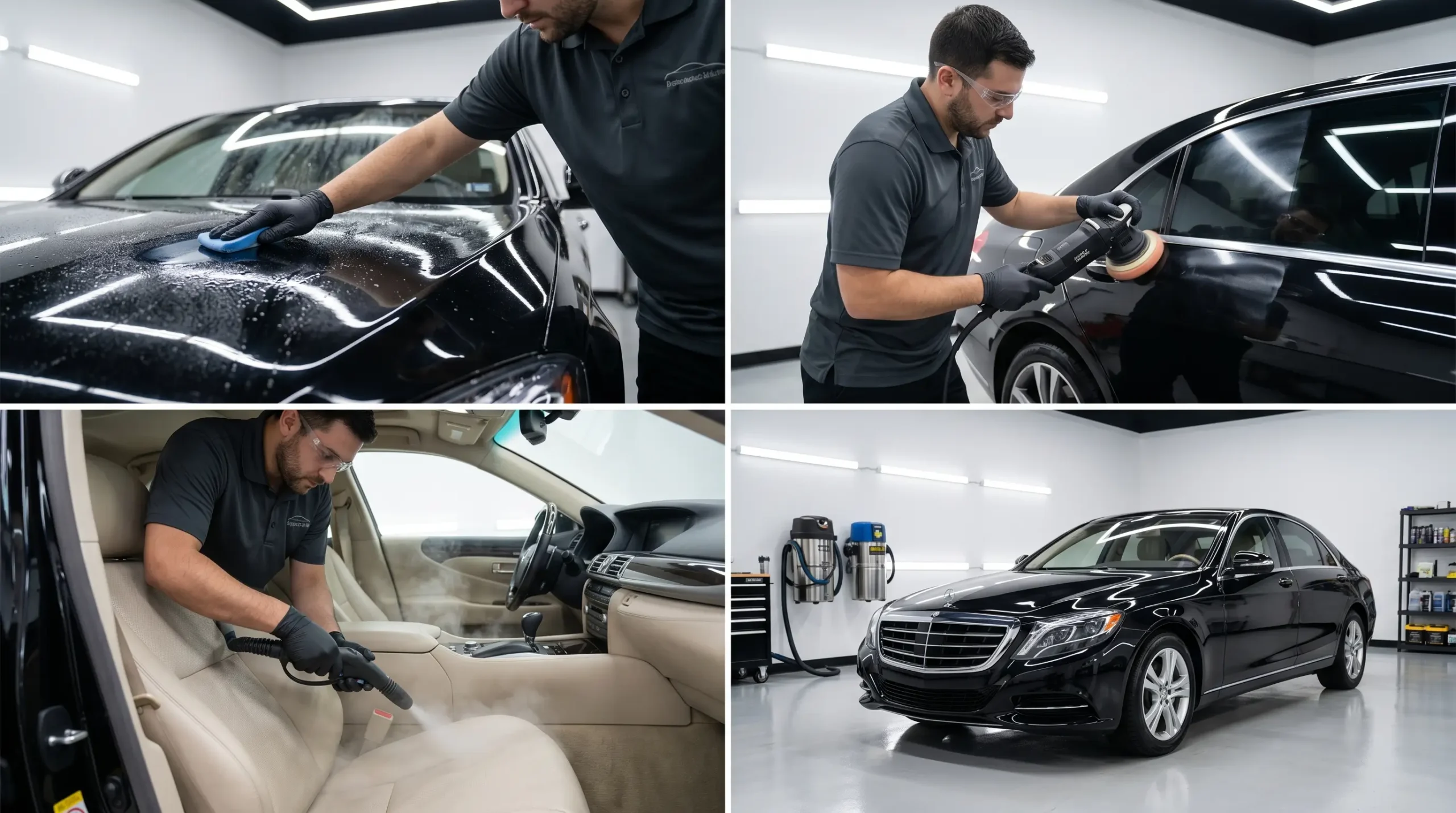
Starting with a Proper Vacuum
Everything begins with thorough vacuuming using soft attachments that pull surface particles away from the seat faces, seams, and perforations without scratching or pressing debris further in. Professionals pull the seams open to reach dirt that has settled between leather panels, making sure the cleaning stage works on the leather itself rather than over a layer of loose debris.
Cleaning with the Right Products
A dedicated leather cleaner or pH-neutral interior cleaner goes onto a leather brush or scrub pad, then gets worked across the surface in a circular motion that allows it to penetrate the leather’s texture. Seam areas get their own attention with a crevice brush that reaches deep into the stitching lines for a complete clean throughout the full seat. This step draws out the body oils, environmental residue, and accumulated grime that routine wiping leaves behind.
Conditioning the Surface
Once cleaned and dried, the leather gets conditioned, and this step matters more than most people realize. A quality leather conditioner works by restoring moisture and replenishing the essential oils that keep leather flexible and soft over time. Professionals apply it with a microfiber applicator in even, methodical passes that build consistent coverage without over-saturating any single area. The consistency of this step is what separates leather that stays looking great for years from leather that starts showing its age ahead of schedule.
Sealing in the Protection
The final stage applies a protective layer that holds the cleaning and conditioning work in place and gives the surface a meaningful buffer against whatever comes next. Depending on the vehicle and the owner’s goals, this might be a premium leather sealant, a UV-blocking dressing, or a ceramic-based coating engineered specifically for interior leather use.
Ceramic Coating and Advanced Protection for Leather Seats
The protective side of leather seat detailing has advanced considerably in recent years, and the options available today go well beyond what a standard wax or basic conditioner can deliver.
A leather dressing applied to the surface provides defense against both UVA and UVB exposure, working in much the same way that sunscreen functions for skin, while simultaneously maintaining the surface’s natural appearance and feel. For drivers who want something that performs at a higher level and lasts longer, advanced ceramic products formulated for leather create a durable barrier that holds up against UV exposure, dirt accumulation, and surface discoloration while keeping the material’s natural look fully intact.
Interior nanoceramic coatings represent the most advanced tier of leather seat protection available through professional detailing services. They bond with the leather surface and hold their performance through extended periods of regular use, making them a smart choice for vehicles that see frequent daily driving or climate conditions that are hard on interior surfaces. These coatings deliver their best results when the leather underneath has already been thoroughly cleaned and conditioned, so proper preparation is always the step that comes first.
Building a Detailing Schedule That Actually Works for Your Leather
How often professional leather detailing shop delivers optimal results depends on how the vehicle gets used, where it lives, and the personal standards of the owner.
A professional cleaning and conditioning appointment every three to six months gives most vehicles a strong foundation. In drier climates or for vehicles that spend significant time in direct sunlight, conditioning closer to every eight weeks, keeps the leather in peak condition through the added environmental stress those conditions create.
Between professional appointments, simple habits at home make a real difference. Blotting spills promptly rather than wiping them, using a sunshade when parked in direct sun, and keeping sharp objects away from seat surfaces all contribute meaningfully to the leather’s ongoing condition and appearance. These small, consistent efforts extend the results of each professional appointment and keep the interior looking well-maintained throughout the ownership experience.
Professional Care and Home Maintenance Working Together
Professional car detailing experts and at-home leather care are not competing approaches. They work best as a partnership, each one doing what the other genuinely cannot.
Professional services bring specialized tools and formulations that are not available over the counter, and that access to professional-grade products and techniques produces a depth of cleaning and a durability of protection that at-home routines simply cannot replicate. A trained detailer reading the leather type correctly, selecting the right products, and applying them with proper technique creates a result that looks and feels meaningfully different from anything achievable with consumer products alone.
Home care fills the space between appointments with gentle surface cleaning, prompt attention to any spills, and occasional light conditioning that preserves the professional baseline. Mobile detailing options add a layer of convenience that many busy drivers find genuinely valuable, bringing the full professional service directly to wherever the vehicle is parked without requiring a drop-off or a wait.
What Consistent Leather Care Does for Your Vehicle Over Time
The case for investing in professional leather seat detailing extends well beyond how the interior looks on any given day. Consistent professional care keeps leather looking and feeling exceptional across the full course of ownership while actively supporting the vehicle’s resale value through the quality of care it reflects.
Vehicles with well-maintained leather interiors hold stronger appeal when it comes time to sell or trade in, and buyers respond clearly and positively to an interior that shows the quality of attention it has received throughout ownership.
Beyond resale, there is the daily experience itself. A leather interior that has been properly cared for feels genuinely better to spend time in. The seats stay soft. The material holds its color. The cabin retains that quality feel that made the leather worth having in the first place. That ongoing return on a consistent care investment is something drivers notice every single time they get behind the wheel. For anyone who values their leather interior and wants it performing and looking its best through every season of ownership, professional car detailing for leather seats is the most rewarding and most sensible investment in the vehicle’s comfort and condition.