Drivers who have made the switch to pressure washing their vehicles consistently say the same thing: they wish they had done it sooner. The results speak clearly: a finish that looks sharper, a process that feels more thorough, and a wash routine that respects the paint rather than stressing it. A pressure washer, used correctly, brings a level of cleaning confidence and paint care that a bucket and sponge genuinely cannot deliver.
Getting there comes down to understanding three things well: the machine, the settings, and the sequence. This guide covers all three in a straightforward, practical way so every driver walks away ready to get outstanding results from every single wash.
How Pressure Washers Create a Cleaner and Safer Wash Experience
The standout benefit a pressure washer brings to car detailing is its ability to lift and clear surface contamination before anything physically contacts the paint.
A wash mitt moving across a panel that has only been lightly rinsed carries grit, road dust, and fine particles along with it. Those particles are the source of swirl marks and micro-scratches that accumulate quietly over months of washing and gradually reduce the depth and clarity of a finish. A pressure washer, paired with a foam cannon, removes the bulk of that contamination before the contact wash begins. The foam clings to every surface, softens bonded grime and traffic film, and the pressure rinse carries all of it away cleanly. The mitt, when it touches the paint at all, meets a surface that is already substantially clear and ready for safe contact.
Why PSI and GPM Matter Most When Choosing Your Machine
PSI: The Range That Cleans Brilliantly and Protects Completely
PSI measures the force of the water stream coming from the nozzle. For automotive detailing, the productive and safe range sits between 1,200 and 1,900 PSI. Within this window, the machine lifts road grime, brake dust, bonded surface contamination, and traffic film from every panel with real effectiveness while keeping paint, clear coat, trim, seals, and protective coatings fully intact throughout every pass.
Pressure washers above 2,000 PSI deliver more force than automotive surfaces need or benefit from. That extra force introduces risk at paint edges, can push contamination into the clear coat, and stresses wax and sealant layers unnecessarily. Staying within the 1,200 to 1,900 PSI range gives every detailer full cleaning capability alongside complete confidence in paint safety from start to finish.
GPM: Where Rinsing Power and Foam Performance Come From
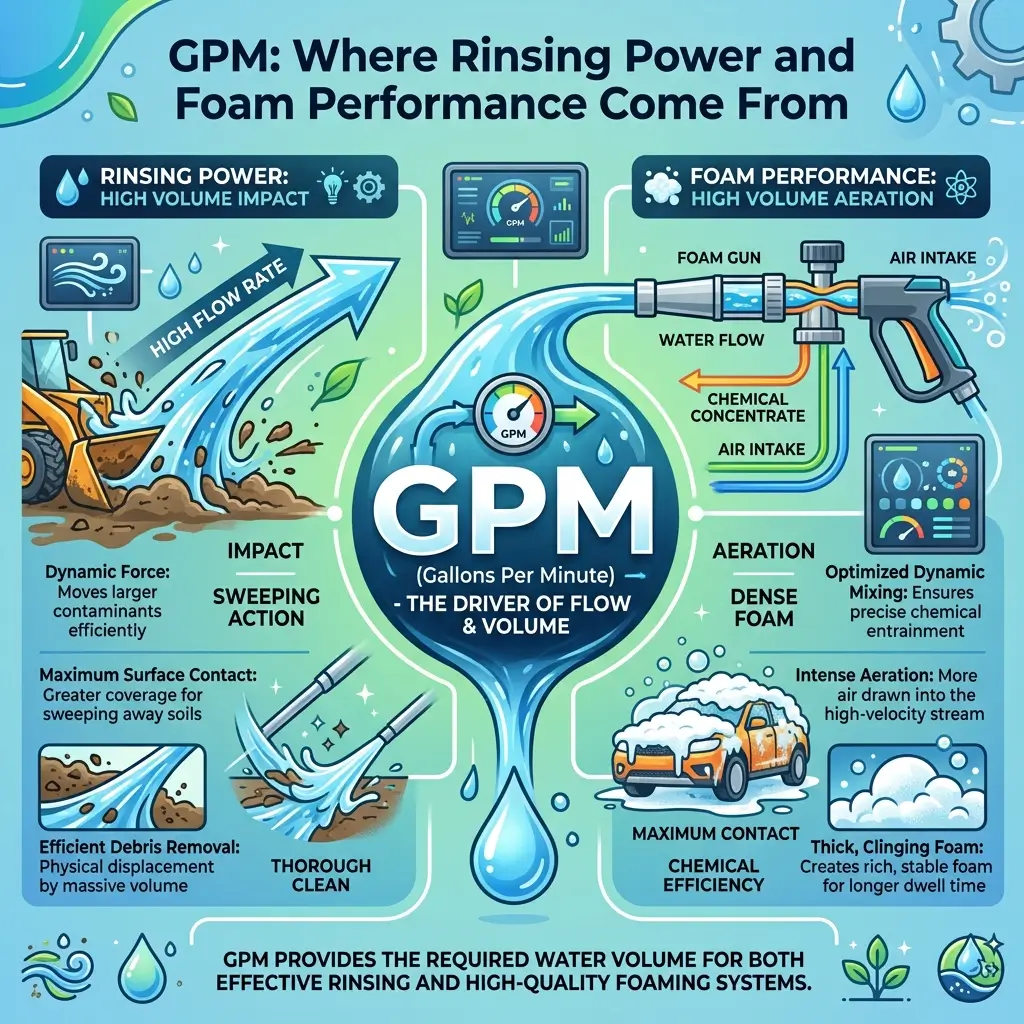
Water volume, measured in gallons per minute, determines how effectively the pressure washer clears foam, soap, and loosened contamination from the vehicle surface once the cleaning agents have completed their work. This specification shapes the quality and speed of every rinse stage and directly determines how well a foam cannon performs.
A flow rate of 1.6 to 2.0 GPM paired with the right PSI range produces a balanced setup that clears each panel quickly and completely, supports rich, thick foam cannon output, and reduces the time spent on every section of the vehicle. Machines that deliver strong PSI alongside only 1.1 to 1.2 GPM create a setup that sounds capable on paper but underperforms noticeably at the vehicle. Matching both specifications well is the decision that makes everything downstream in the wash process work beautifully.
The Balance That Professionals Use
Experienced detailers consistently confirm that what performs best is a machine prioritizing a flow of 1.5 GPM or higher with moderate, paint-safe pressure, creating the kind of thorough, complete rinsing performance that professional automotive detailing calls for. Getting both numbers right before anything else is the foundation of a wash routine that delivers excellent results every time.
Electric vs Gas: Choosing the Power Source That Serves Your Needs
Electric Pressure Washers: Reliable, Clean, and Perfect for Home Use
Electric pressure washers are quiet, lightweight, low-maintenance, and genuinely well-suited to the PSI and GPM range that car detailing calls for. They start immediately with no fuel management required, produce zero exhaust, store compactly between sessions, and deliver consistent, reliable performance across every wash of the year.
For drivers washing their vehicles at home regularly, an electric unit in the 1,400 to 1,900 PSI range with 1.4 GPM or above handles every wash scenario beautifully, from a quick maintenance rinse to a thorough full detail with a foam cannon and contact wash included. Models with a Total Stop System that cuts the pump automatically when the trigger is released extend pump life meaningfully and use energy efficiently, both worthwhile qualities in a machine used frequently.
Gas Pressure Washers: Power and Portability for Professional Detailing
Gas-powered units deliver full portability and sustained higher output for settings where electrical access is limited or where volume and consistency across multiple vehicles demand more capability. Mobile detailers serving clients across varied locations, and professional shops managing high vehicle throughput daily, benefit strongly from what a gas unit provides in terms of independence and output reliability.
Shop-based operations handling multiple vehicles daily benefit from the sustained output that higher-capacity units deliver, while mobile detailers value the freedom from electrical outlets that gas-powered machines provide across varied and changing job locations. Pairing a gas unit with quality automotive nozzles and the right working distance from the surface keeps every finish fully protected while the machine handles demanding cleaning work with ease.
Nozzle Tips: Matching the Right Tip to Each Stage of the Wash
The 40-Degree White Tip: The Foundation of Every Automotive Wash
The 40-degree white tip produces the widest, most gentle fan pattern among standard pressure washer nozzles. It spreads water pressure evenly across large surface areas, keeping the force at any individual point comfortably within safe limits for paint, ceramic coatings, sealants, and all trim surfaces. This tip opens every automotive wash, handles the pre-rinse stage, and returns to the wand for the post-foam rinse. Most professional detailers keep this nozzle in place for the majority of their time on any vehicle, reaching for other tips only when specific surfaces genuinely call for more focused attention.
The 25-Degree Green Tip: Focused and Effective for Wheels and Lower Panels
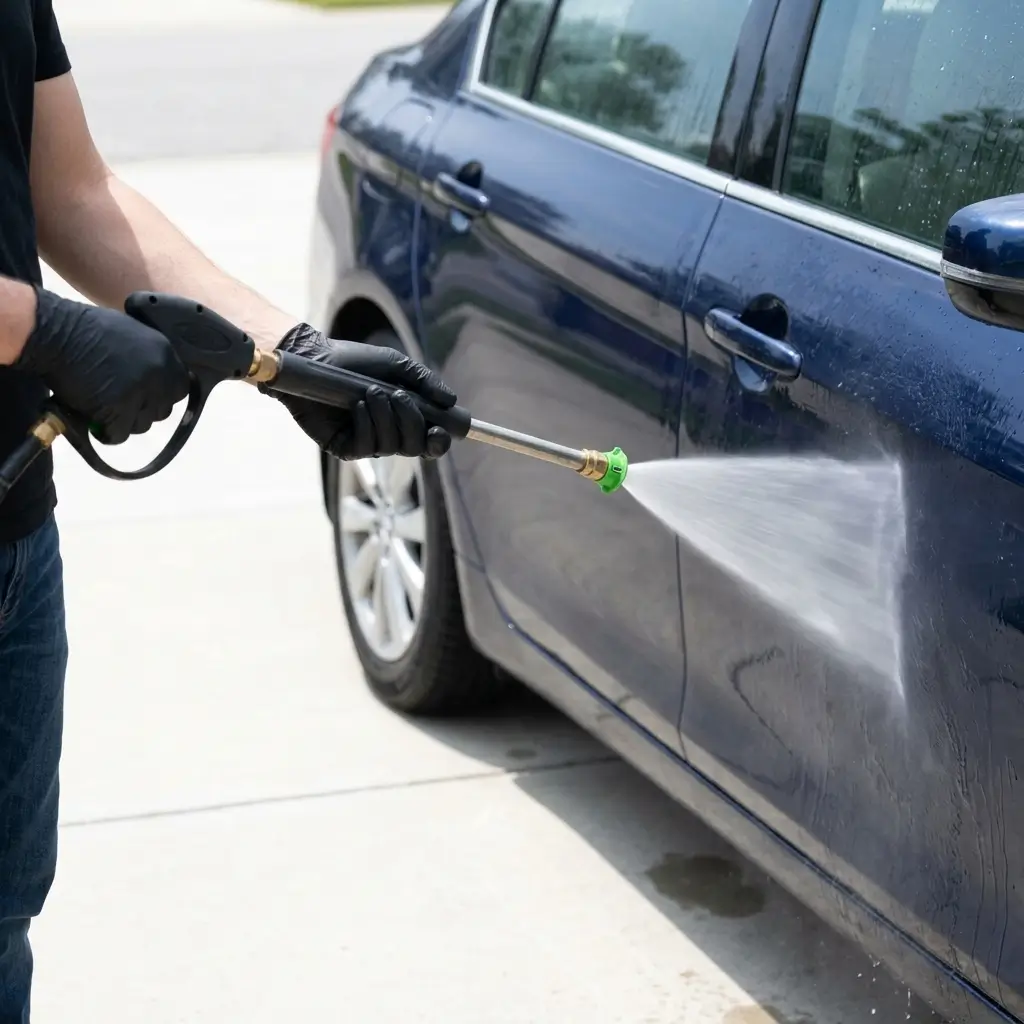
The 25-degree green tip narrows the spray pattern and concentrates cleaning energy on surfaces carrying heavier buildup than the body panels above them. Wheels loaded with brake dust, tires with road grime worked into their texture, and lower sills with accumulated road film all respond well and clean thoroughly with this tip in place. Held at a consistent working distance of 18 to 24 inches from any painted surface, the green tip delivers focused, effective cleaning at every stage where it is the right choice.
Tips That Belong on Other Surfaces
The 15-degree yellow tip and the 0-degree red tip both concentrate pressure to levels that automotive paint and clear coat simply do not benefit from. The yellow tip serves metal surfaces and concrete well. The red tip delivers a pinpoint stream with no appropriate automotive application at any stage. Keeping both of these away from body panels and painted surfaces is the consistent professional standard, and following it keeps every finish looking its absolute best throughout the full wash process.
Building a Complete Detailing Kit with the Right Attachments
Foam Cannon
A foam cannon is the accessory that transforms a pressure washer from a capable rinsing tool into a genuinely professional cleaning system. It connects directly to the wand, blends car wash soap with water and air, and produces a rich, thick foam that coats every surface of the vehicle immediately and begins softening surface contamination on contact.
The foam’s dwell time on the paint allows the cleaning agents to work thoroughly before any physical contact is made. When the rinse follows, contamination lifts away completely and cleanly. The wash mitt, when used afterward, moves across paint that has already been substantially prepared, making the contact stage faster, safer, and more effective all at once. A foam cannon that works well requires the pressure washer to deliver at least 1,100 PSI and 1.5 GPM. The reservoir’s soap-to-water ratio controls foam richness, and the rotary dial adjusts the air mixture to produce the ideal foam volume and texture for the vehicle’s condition.
Undercarriage Cleaner
The undercarriage cleaner slides under the vehicle on casters and uses multiple upward-facing high-pressure nozzles to clean the underside of the car thoroughly, reaching areas that standard washing never touches. Road salt, mud, and accumulated debris collect under the vehicle over time, and clearing them regularly through an undercarriage cleaner supports the vehicle’s long-term condition in a meaningful and lasting way. For drivers in regions with winter road salt or frequent off-road driving, this attachment adds a genuinely valuable layer of protection to every wash routine.
Extension Wands and Quality Quick-Connect Fittings
Extension wands bring comfortable reach to roof panels and the tops of taller vehicles without requiring awkward body positioning or reducing water pressure through the line. Quality stainless steel quick-connect fittings allow accessories to swap between wash stages in seconds, maintain leak-free connections under pressure, and hold up reliably through consistent use across every season of regular detailing.
How to Structure Your Wash Routine for Maximum Safety and Shine
Wheels and Arches First, Every Time
Wheels, tires, and wheel arches receive attention first before any body panel is touched. Applying wheel cleaner, allowing it to dwell fully, and rinsing the wheels completely before moving to the body of the vehicle keeps brake dust, iron particles, and wheel cleaner chemistry from contaminating panels that have already been treated. Starting with the dirtiest areas and working outward is the approach every professional detailer uses consistently, and it makes a clear difference in the quality of the final result.
Foam First or Pre-Rinse First: Choosing What Serves the Vehicle
Both approaches work well, and selecting between them based on the vehicle’s actual condition produces the best results. A vehicle carrying visible mud, heavy road soiling, or debris from off-road driving benefits from a brief pre-rinse with the white tip first, which lifts the loose bulk material and makes the foam stage significantly more effective across every surface. A vehicle with lighter everyday soiling responds best to foam applied directly to a dry surface, where the cleaning agents get maximum concentrated dwell time and deliver their strongest pre-wash lifting performance before any rinse follows.
Foam Application: Taking the Time That Makes the Difference
Attach the foam cannon, dial in the soap ratio and air mixture, and cover the vehicle completely in a generous, even layer of foam, working from the roof through the body panels, lower sections, wheels, and tires in a methodical pass. Allow the foam to sit for several minutes so the cleaning agents work thoroughly across every surface before the rinse begins. This dwell stage is where the real cleaning performance happens, and giving it the time it deserves consistently produces results that stand apart from a rushed wash.
Thorough Top-to-Bottom Rinse
Swap the foam cannon for the white 40-degree nozzle and rinse the vehicle from roof to lower panels in consistent overlapping passes, clearing all foam and loosened contamination away completely before it has any opportunity to dry on the surface. A thorough, complete rinse at this stage is one of the most important contributors to a clean, spot-free, residue-free finish once the vehicle dries.
Contact Wash and Immediate Drying
Where a contact wash stage follows, a quality wash mitt loaded with fresh shampoo solution works across panels in straight, overlapping strokes. The two-bucket method, one bucket holding clean soapy water for loading the mitt and a second holding rinse water for clearing the mitt before it returns, keeping contamination isolated from the paint and the wash water throughout the full contact stage. A quality microfiber drying towel or forced-air blower used immediately after the final rinse delivers the cleanest, most spot-free finish and eliminates water spotting completely.
How to Pressure Wash Cars with Ceramic Coating or Paint Protection Film
Ceramic coating and paint protection film are both fully compatible with pressure washing, and a well-executed pressure washer routine is genuinely one of the most effective maintenance approaches available for vehicles carrying either protection.
Ceramic-coated vehicles wash comfortably and safely at 1,000 to 1,500 PSI using the white 40-degree nozzle held consistently at 18 to 24 inches from the surface. The foam cannon pairs especially well with ceramic-coated paint because it loosens and lifts surface contamination with zero direct contact, which preserves the coating’s hydrophobic performance fully and keeps swirl marks entirely out of the process. Beginning every maintenance wash with a quality foam application followed by a thorough white-tip rinse keeps the coating performing at its best and looking outstanding through every season of ownership.
Choosing the Pressure Washer That Delivers Consistent Results
For home detailing and regular vehicle maintenance, an electric unit delivering 1,400 to 1,900 PSI and 1.4 to 1.8 GPM handles every situation thoroughly and comfortably. These machines are quiet, compact, simple to maintain, and pair perfectly with a foam cannon, an undercarriage cleaner, quality nozzle tips, and stainless quick-connect fittings to build a complete, professional-level wash setup from the home driveway.
Warranty coverage and responsive manufacturer support are both worth factoring into any purchase decision. For professional detailers and mobile operators working across multiple vehicles and locations, a higher-output electric model or a well-specified gas unit with a full accessory setup delivers the capability, output consistency, and operational flexibility those demands call for. The right pressure washer, selected specifically for automotive use and paired with the right technique and accessories, brings outstanding, satisfying results to every vehicle it touches across every wash, every season, and every year of reliable, rewarding service.