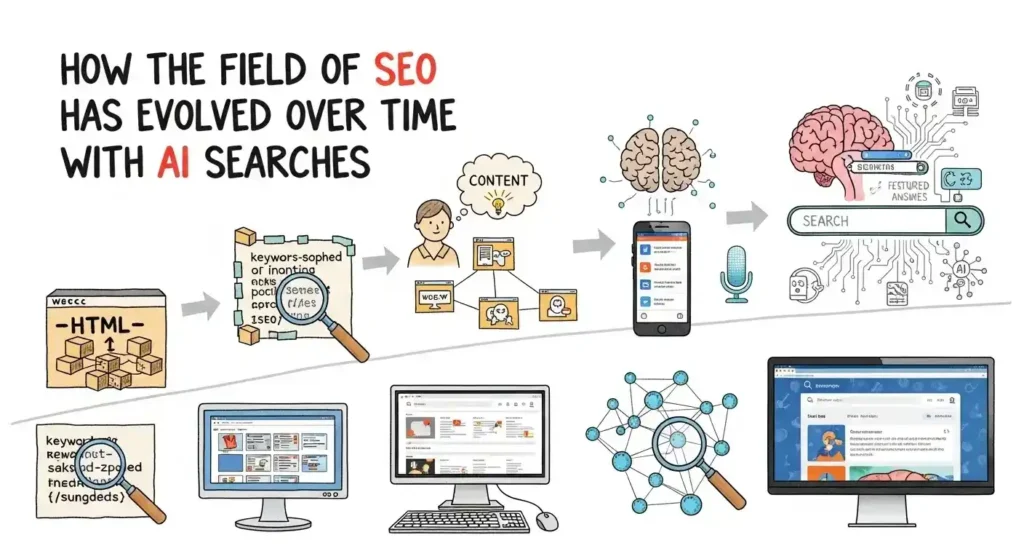
Search engine optimization has gone through major changes over the years. What used to depend heavily on keywords, backlinks, and technical manipulation has developed into a broader strategy centered around user experience, search intent, trust, and content quality. Businesses that still approach SEO the way it worked years ago often struggle to maintain visibility in today’s search results.
The evolution of SEO closely follows the way people use the internet now. Search behavior is more specific, competition is stronger, and search engines are much better at understanding what users are actually looking for. To understand how SEO has changed, it helps to look at where it started, what shifted over time, and what matters most today. SEO has not become less important. This is exactly why understanding why you should never ignore SEO is important for businesses today. If anything, it has become more valuable for businesses that want to attract qualified traffic, build visibility, and stay competitive online.
The Early Days of SEO
In the early phases of search, SEO involved a lot more formulas than is currently the case. Webmasters were able to rank websites well simply by using identical keyword phrases on the site, including meta tags and numerous low-quality backlinks. Search engines were less sophisticated back then, and it was not uncommon for sites to rank well regardless of their lack of substance and poor usability.
During the evolutionary phase of SEO referred to above, search engines played more of a role than users did. Websites ranked well irrespective of their content and usability, so that companies employing the technical tricks had a chance of outranking other sites with greater content. Such practices gradually became less helpful as search engines began ranking better sites while punishing spammed websites.

How Has SEO Changed Over Time?
One of the biggest changes in SEO is the move from search engine-focused tactics to user-focused strategy. Search engines, especially Google, now aim to understand the intent behind a query instead of simply matching exact words on a page. That means strong rankings today depend on much more than keyword placement. Search engines now look at several quality signals, including:
- Content usefulness and originality
- Website speed and mobile usability
- Search intent alignment
- Topical authority and trust
- Internal linking and site structure
- User engagement and page experience
In simple terms, how SEO has changed comes down to one key shift: websites need to be genuinely helpful, relevant, and easy to use if they want to perform well consistently. A page can no longer rank just because it repeats a keyword several times. It needs to answer the searcher’s question clearly and offer a solid experience.
The Rise of Google Algorithm Updates
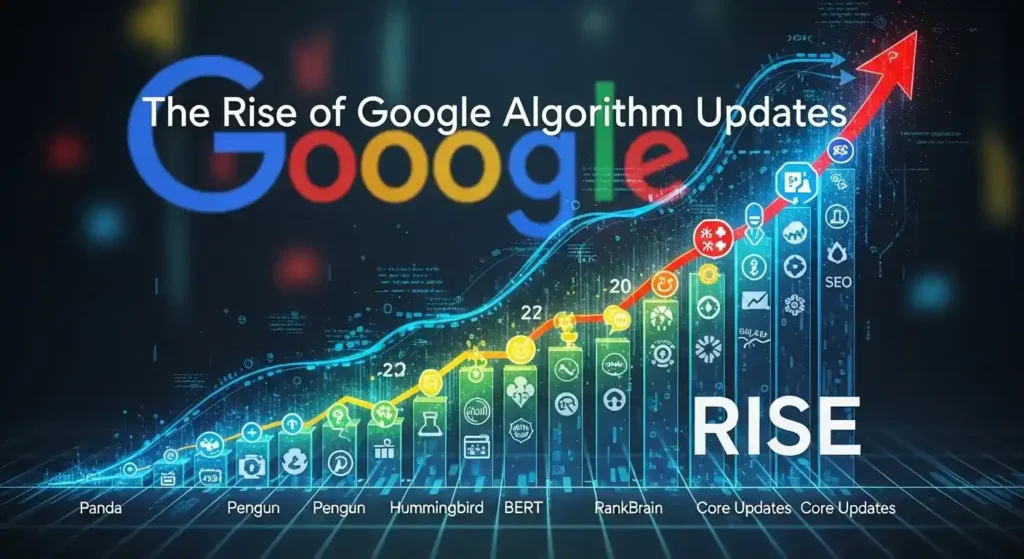
A major reason behind the evolution of SEO has been Google’s algorithm updates. Over time, these updates have changed what search engines reward and what they filter out. Updates such as Panda, Penguin, Hummingbird, RankBrain, BERT, and Helpful Content all pushed SEO further away from shortcuts and closer to quality. While each update had its own technical role, the bigger takeaway is simple: weak tactics became less effective, and better content became more important.
For example, older SEO methods often relied on publishing large volumes of pages with nearly identical wording to target more keywords. Today, that kind of content can hurt performance if it feels repetitive or lacks real value. Modern SEO rewards content that is clear, useful, and written with purpose. Businesses now need to think more carefully about what their audience wants to find and how to provide it better than competing pages.
Search Intent Changed the Way Content Is Created
One of the most important developments in SEO is the rise of search intent. This refers to the reason behind a user’s search. Someone searching for “best SEO tools” is probably looking for comparisons, while someone searching for “SEO agency pricing” may be much closer to making a decision.
This shift has changed the way content is planned and written. It is no longer enough to target a keyword without thinking about what the searcher is actually trying to achieve. As a result, content strategy now plays a much bigger role in SEO. Businesses need to create pages that align with different stages of the search journey, including:
- Informational searches
- Comparison-based searches
- Local service searches
- Commercial investigation queries
- Action-oriented buying intent
This is one of the clearest examples of how SEO has evolved over time. This shift is exactly why businesses can no longer treat SEO as optional or secondary in their marketing strategy. Content is no longer created only to rank. It is created to answer, guide, and support action. This is why businesses today cannot afford to ignore SEO when planning content strategy
SEO Became More Than Just Keywords and Links
Keywords and backlinks still matter, but they are no longer enough on their own. SEO is now much more connected to branding, website quality, and overall digital credibility. Search engines today look at how trustworthy a website appears. That includes content quality, brand reputation, visible expertise, and consistency across the web. A website that loads slowly, feels outdated, or lacks clear structure may struggle even if it has solid keyword usage. This means modern SEO often overlaps with several areas, including:
- Content marketing
- UX and web design
- Technical website performance
- Brand positioning
- Conversion optimization
- Local visibility and reputation management
That broader role is one reason many businesses now take a more strategic approach to SEO instead of treating it like a one-time setup. This is also why many experts emphasize why businesses should never ignore SEO in today’s competitive market.
Mobile Search Changed the Rules
Another major shift in the SEO evolution came with the rise of mobile devices. Years ago, most online searches happened on desktop computers. Today, a large portion of searches happen on smartphones and tablets.
This changed how websites needed to be designed and optimized. Search engines began placing much more importance on mobile usability, responsive layouts, and page speed. A site that worked fine on desktop but performed poorly on mobile could quickly lose visibility.
Mobile behavior also changed the type of searches people perform. Users often search with immediate needs, local intent, or voice-style phrasing. Queries like “coffee shop near me” or “emergency dentist open now” became much more common. As a result, SEO became more tied to convenience, accessibility, and local search behavior.

The Role of Local SEO Became Much More Important
As search became more location-aware, local SEO became essential for many businesses. Search engines now personalize results based on geography, which means businesses need to optimize more than just their websites. They also need strong local profiles, accurate directory listings, and map visibility.
For service providers, medical practices, restaurants, law firms, and many other local businesses, appearing in local search can directly impact leads and revenue. This part of how SEO has changed is especially important for businesses that depend on nearby customers. Local optimization now often includes the following:
- Google Business Profile optimization
- Review generation and response
- Location-based landing pages
- Local keyword targeting
- Citation consistency
- Map visibility improvements
What Competitor Trends Reveal About Modern SEO
A review of current top-ranking content on the evolution of SEO reveals a common pattern. Many competitor articles explain the history of SEO fairly well, but a lot of them stay too surface-level. They often mention algorithm updates, mobile search, and keyword changes without clearly explaining what those changes mean for businesses today.
That creates room for stronger content. Today’s readers are not only looking for a timeline. They want to understand how SEO has changed, why it matters now, and what they should focus on next. Content that performs well on this topic usually succeeds because it combines three things:
- A clear explanation of SEO’s past
- Practical relevance for today’s search landscape
- Useful insight into what businesses should prioritize now
- This is where many generic articles fall short. They explain the changes but do not always connect them to real business strategy.
AI, Search Features, and the New Direction of SEO
SEO continues to change as search engines become better at understanding language, behavior, and context. Artificial intelligence now plays a larger role in how queries are interpreted and how content is ranked. Search results also look different than they used to, with featured snippets, map packs, FAQs, videos, shopping results, and AI-generated summaries appearing more often.
That means visibility today is not only about ranking in standard organic results. Businesses also need to think about how their content appears across different search formats. Content today should be:
- Easy to scan and well-structured
- Written clearly for users and search engines
- Built around real questions and useful answers
- Strong enough to compete in multiple result types
As search keeps evolving, SEO becomes less about chasing a single ranking and more about building a stronger overall presence.
What SEO Looks Like Today
SEO is now the combination of strategies, content creation, technical optimization, good UX, and building authority. This evolution clearly shows why SEO should never be ignored by businesses aiming for growth and visibility. SEO is not a specific technique anymore but a broader approach, which is a part of any business strategy aimed at improving visibility, trustworthiness, and growth.
When asked what has changed with SEO, it should be answered that it has simply improved. The current SEO process requires much effort from companies. You have to know your target audience, create valuable content, maintain your website well, and prove search engines that your company is worth ranking.