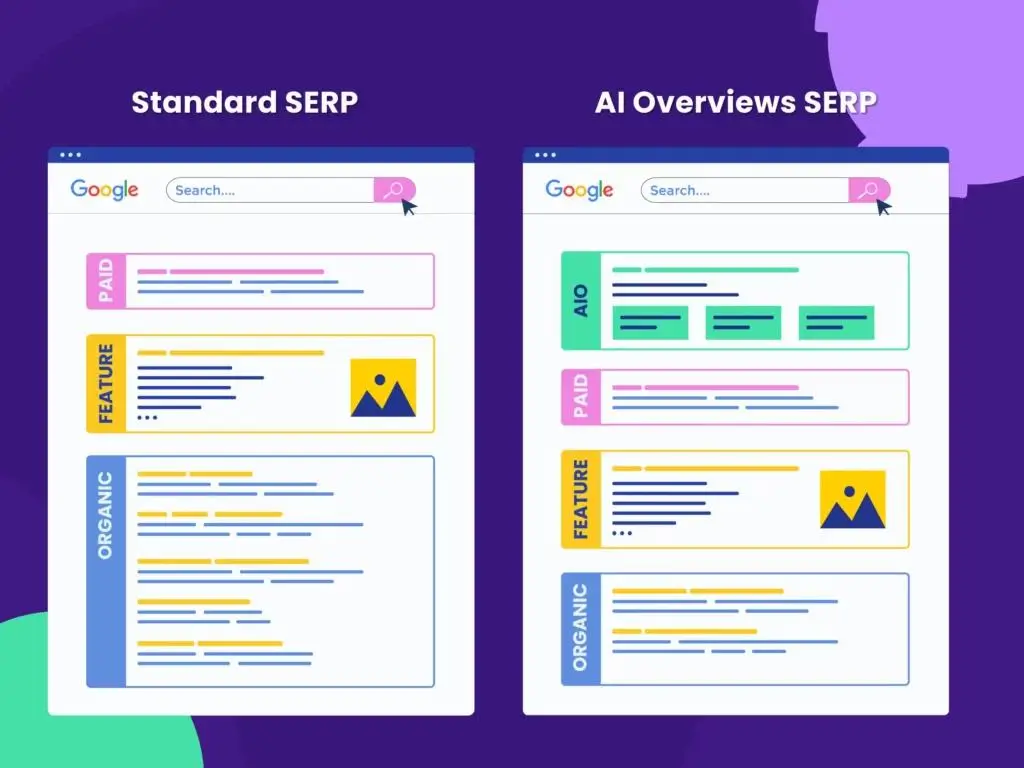
Google’s AI Overviews have changed how users interact with search results, and for SEO teams that have not yet adjusted their approach, certain content and strategy gaps are quietly costing traffic, authority, and ranking potential every single day. This guide identifies every significant impact you need to be aware of, explains precisely why each one happens, and gives your team the clear, actionable path to address each one before it compounds further.
Why AI Overviews Demand a Rethink of Your Entire SEO Approach
Since Google launched AI Overviews at scale in May 2025, expanding them across more than 200 countries and 40 languages, the mechanics of earning organic traffic have shifted considerably. AI-generated summaries now sit above traditional blue-link results, synthesizing answers from multiple sources and delivering them before a user ever reaches an organic listing. For content teams, publishers, and brand marketers who have not adapted, this creates real and measurable exposure across several areas. Understanding what AI Overviews mean for SEO and your rankings (AI SEO: How to Rank in Google’s SGE & AI Overviews) means starting with the data that shows exactly how significant those effects are.
| Key Research Finding | Figure | Source |
| Average CTR drop for top-ranking pages when AI Overview appears | 34.5% | Ahrefs, 2025 |
| Share of Google searches ending without a click (May 2025) | 69% | Similarweb, 2025 |
| Traffic decline reported by Chegg within one year of AI Overview expansion | 49% | Chegg, 2025 |
| Growth in AI Overview keyword coverage from Q1 to Q4 2024 | 155% | Semrush, 2025 |
| Average CTR reduction across BrightEdge tracked domains | 30% | BrightEdge, 2025 |
Important framing: Each impact listed in this guide is avoidable. The teams experiencing the most significant traffic losses share one thing in common, they did not act early. The teams holding and growing their traffic share something different as they understand the mechanism behind each impact and address it systematically.
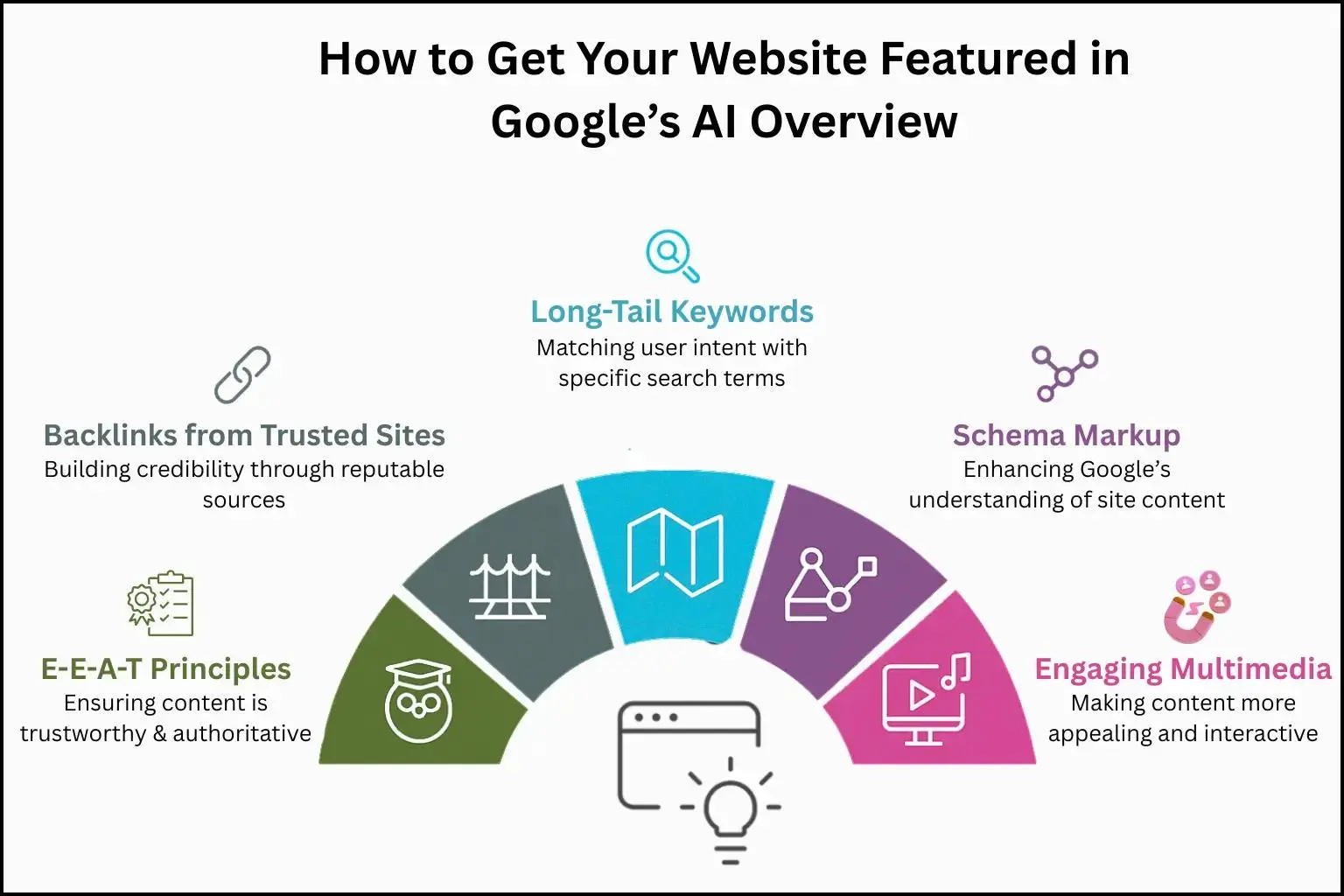
The SEO Impacts of AI Overviews Your Strategy Must Account For
These are not theoretical risks. Each of the following impacts is documented in research conducted across 2024 and 2025, affecting sites across industries, content types, and domain authority levels. Every one of them responds to clear, deliberate action.
Impact 01: Reduced click-through rates across informational content
When an AI Overview answers a query directly on the results page, users have less immediate reason to click through to the source. BrightEdge recorded an average 30% CTR reduction across tracked domains in May 2025, with informational queries taking the steepest drops.
How to address it: Add depth and original data that makes clicking through worth the user’s time.
Impact 02: Growing zero-click search rates absorbing top-funnel traffic
Zero-click searches grew from 56% to 69% of all Google searches between May 2024 and May 2025. Users receiving a complete answer in the Overview have no structural reason to visit a website, concentrating the cost on pages targeting broad informational queries.
How to address it: Shift strategic focus toward commercial and decision-stage queries that AI overviews are less equipped to fully satisfy.
Impact 03: Rankings no longer guarantee proportional traffic
Only 12% of AI overviews link to the number one ranked page, according to Ahrefs. A site can hold a top position and still see significant traffic decline if the AI overview for that query draws from a different set of sources, breaking the long-standing relationship between rank and clicks.
How to address it: Optimize content for citation potential alongside traditional ranking signals.
Impact 04: Thin content loses authority value at an accelerated rate
Generic, surface-level content that mirrors what dozens of other sites already cover offers AI systems no reason to cite it and users no reason to click through for more. As AI Overviews expand coverage, the cost of undifferentiated content grows more significant with each quarter.
How to address it: Build proprietary data, firsthand case studies, and expert analysis that competitors cannot replicate.
Impact 05: Weak E-E-A-T signals reduce citation and ranking eligibility
AI systems evaluate source credibility before deciding what content to cite in an overview. Sites without clear author credentials, verifiable expertise signals, or consistent editorial standards are systematically deprioritized regardless of keyword optimization or backlink volume.
How to address it: Strengthen author pages, primary source citations, and organizational trust signals across every major content page.
Impact 06: Educational and publisher content faces the steepest traffic exposure
Content categories built around answering study questions, explaining concepts, or providing definitional answers are the most frequently summarized by AI Overviews. Chegg’s 49% traffic decline following the rollout of AI Overviews into educational queries illustrates how concentrated this exposure can be within specific verticals.
How to address it: Layer in unique expert perspectives, real-world application examples, and structured formats that go meaningfully beyond definitions.
Impact 07: Commercial queries are becoming progressively more affected
Semrush’s analysis of more than 10 million keywords found that AI Overviews expanded their coverage of commercial, transactional, and navigational queries by 155% from Q1 to Q4 2024. Teams that addressed only informational content exposure are increasingly finding their commercial pages affected as well.
How to address it: Audit the full content funnel systematically, not just top-of-funnel informational pages.
Impact 08: Misrepresentation risk when AI summaries oversimplify brand content
AI-generated summaries occasionally compress nuanced brand messaging into inaccurate or incomplete representations. Because the overview appears before the user visits the site, first impressions can be shaped by a summary your team had no hand in writing.
How to address it: Use structured data, precise schema markup, and clear content architecture to guide accurate AI summarization.
Which Content Types Face the Most Significant Exposure Right Now
| Content Category | Exposure Level | Primary Effect | Recommended Response |
| Broad informational (“what is,” “how does”) | Very high | AI Overviews satisfy user intent without a click, reducing CTR significantly for generic answers | Restructure around original data, practitioner depth, and insights not available elsewhere |
| Educational and definitional | Very high | Concept explanations are the most consistently summarized query category | Add expert commentary, real-world application, and formats that go beyond definition |
| Commercial comparison (“best tools,” “top options”) | Growing | Coverage expanding into comparison queries, though full evaluation still drives click-throughs | Build thorough, firsthand-tested comparison pages with specific use-case guidance |
| Transactional and conversion-focused | Lower | Purchase-intent users still click through because AI cannot complete the transaction | Prioritize conversion clarity, trust signals, and complete product or service information |
| Branded and navigational | Minimal | Users searching for a specific brand are largely unaffected by AI Overview summarization | Invest in branded content publishing and growing direct branded search volume |
The Content Qualities That Protect Your Pages and Earn Citation in AI Search
Understanding how to optimize content for Google’s AI-powered search results (How to Optimize Content for Google’s AI-Powered Search Results) means building the qualities that AI systems actively look for when selecting sources to cite. These qualities also happen to be the ones that make content genuinely worth reading.
Original research and proprietary data that cannot be summarized away
The single most powerful protective quality any content page can have is information that does not already exist elsewhere on the web. Building this kind of content requires more upfront investment, but the returns in citation potential, backlink acquisition, and sustained traffic are measurably stronger.
What original, citation-worthy content includes the following:
- Proprietary benchmarks, platform data, or performance metrics drawn from your own client work or research
- Firsthand implementation guides that document real configurations, edge cases, and troubleshooting insights from actual projects
- Expert interviews and practitioner quotes that bring perspective unavailable on any competing page
- Original surveys or industry studies with stated methodology, sample size, and clearly presented findings
- Case studies with specific outcomes, measured results, and the reasoning behind strategic decisions made along the way
E-E-A-T signals that establish credibility at every level of your site
This is precisely why AI SEO and ranking in Google’s SGE and AI Overviews depend so heavily on trust signals rather than technical optimization alone. A strong E-E-A-T profile protects your content from being deprioritized in AI source selection and builds the kind of long-term domain authority that sustains rankings through continued algorithm evolution.
E-E-A-T improvements to apply across your highest-value pages:
- Add credential-backed author bios that clearly state relevant expertise, professional background, and verifiable credentials
- Cite primary research sources, peer-reviewed studies, and authoritative data close to the specific claims they support
- Display a clearly visible “last reviewed” or “updated” date on pages covering topics that evolve with industry changes
- Implement structured data, including Article schema with author markup, FAQ schema, and HowTo schema where naturally applicable
- Ensure your About page, team profiles, and organization schema accurately represent your domain expertise with specificity
A Structured Recovery and Adaptation Plan for SEO Teams Acting Now
Knowing why zero-click searches are happening and how to win anyway (Why Zero-Click Searches Are Happening and How to Win Anyway) requires a sequenced plan of action that begins with diagnosis, moves through content improvement, and expands into new growth territory.
Phase 01: Days 1 to 30 — Diagnose your exposure accurately
- Use Search Console to identify pages where impressions are stable but CTR has declined meaningfully
- Check which ranking keywords now trigger AI Overviews using Semrush or Ahrefs
- Build a prioritized list of pages by traffic value and commercial importance
- Audit the top 20 pages for E-E-A-T signals, content depth, and structured data coverage
Phase 02: Days 31 to 60 — Strengthen your priority content
- Restructure pages so direct, specific answers appear in the opening paragraph of each section
- Add or upgrade author credential sections on every high-value page
- Integrate primary source citations and original data into the body of the content
- Apply FAQ, HowTo, and Article schema with author markup across priority pages
Phase 03: Days 61 to 90 — Expand into resilient growth territory
- Build new pages targeting transactional and decision-stage queries in your topic cluster
- Create unique data assets, original surveys, or benchmark reports that earn citation across AI platforms
- Monitor AI Overview citation rates alongside traditional rankings and CTR trends
- Diversify traffic sources with email, community, and direct audience relationship channels
Beyond CTR: The New Search Metrics Portfolio for the AI Era
As proven tactics for ranking in Google’s SGE (How to Rank in Google’s SGE: Proven Tactics) demonstrate, a strong search presence in the AI overview era shows up across a broader set of signals than click-through rate alone.
| Metric | What it Measures | Why it Matters Now |
| Branded search volume | How many users search for your brand name directly | Reflects cumulative authority and awareness that AI Overview citations build over time, independent of organic CTR |
| AI Overview citation rate | How frequently your pages appear as sources in AI-generated summaries | Directly measures your content’s credibility and relevance in the eyes of AI retrieval systems |
| Conversion rate by traffic source | The quality and intent level of users arriving from search | Traffic arriving despite an AI Overview is often higher-intent, meaning fewer clicks may represent stronger commercial outcomes |
| Impressions to click ratio by query type | CTR performance segmented by informational, commercial, and transactional intent | Identifies which segments of your content portfolio need the most strategic attention |
Tip: AI Overviews are not static. Semrush data shows their keyword coverage grew 155% in one year and fluctuated significantly quarter to quarter. Monitoring your exposure on a monthly basis is the approach that keeps your strategy ahead of continued rollout rather than responding to it after the fact.
Final Thoughts
The brands successfully navigating AI overview expansion share one quality: they moved from awareness to action early. Each impact documented in this guide responds to deliberate investment in content depth, credibility, and structure. Your content program is the most durable asset in your SEO strategy, and building it to the standard that earns citation in AI search is the same standard that builds lasting organic authority across every future update.
Start with your highest-priority pages, strengthen the credibility signals across your content program, and build the original, specific, well-structured work that gives your audience a compelling reason to choose your site over a summarized answer every single time.